
🌤Seasonal Gardening & Calendar
Grow with the Rhythm of the Year
Plan sowing and harvest month by month. Soil, water, biodiversity and timing—your calm, climate-smart gardening calendar by SeedsWild.
Table of Contents
1) Why garden with the seasons
A garden breathes. Across the year, soil temperature, day length, and available water become your real roadmap. Following that rhythm isn't restraint—it's how you garden with less water, healthier soil, and steadier harvests.
👉If you're building a whole-garden routine (compost, green manures, organic matter), you'll find a practical framework in our guide to Permaculture & Sustainable Gardening.
Internal Link: Permaculture & Sustainable Gardening.
2) Read your growing window (climate • soil • light)
Three levers shape your dates:
- Climate & microclimate: day/night swings, wind, exposure, heat islands on balconies.
- Soil: living soil (mulch, organic matter, mycorrhizae) warms and breathes better, sometimes bringing sowings forward.
- Light: day length drives flowering and fruit set for many crops.
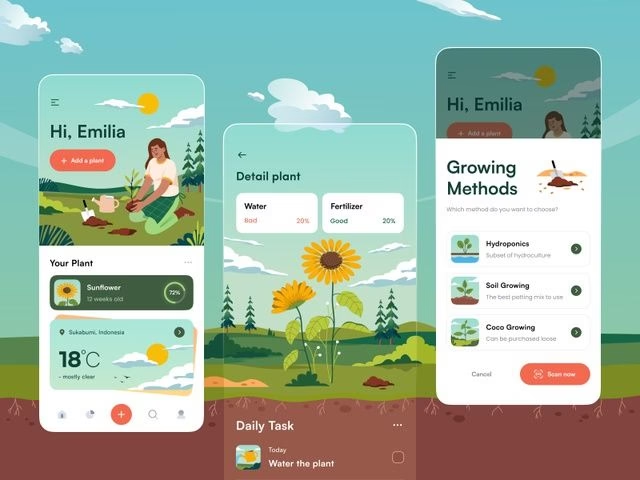
👉SeedsWild tip: the SeedsWild AI app personalizes seeds recommendation, sowing windows via Sow_Stage and tracks crop stages with Growth_Stage.
3) The year at a glance (spring → winter)
Spring — restart
Warming soil and longer days: time for direct, quick sowings and transplants under light cover. Early melliferous flowers (phacelia, borage) prime natural enemies that safeguard young plants.
Summer — fine steering
Water and shade matter most. Deep watering + mulch, evening sowings, and low melliferous flowers carpets keep beds cool while fruiting crops peak.
Autumn — gentle reset
Great for root and leafy Green and for preparing next season: cover crops, bulbs, perennials.
Winter — strategy mode
Planning, soil cover, perennial care, season review. Focus on fertility building rather than forcing growth.
4) Month-by-month: simple decision rules
Instead of rigid lists, rely on three checks:
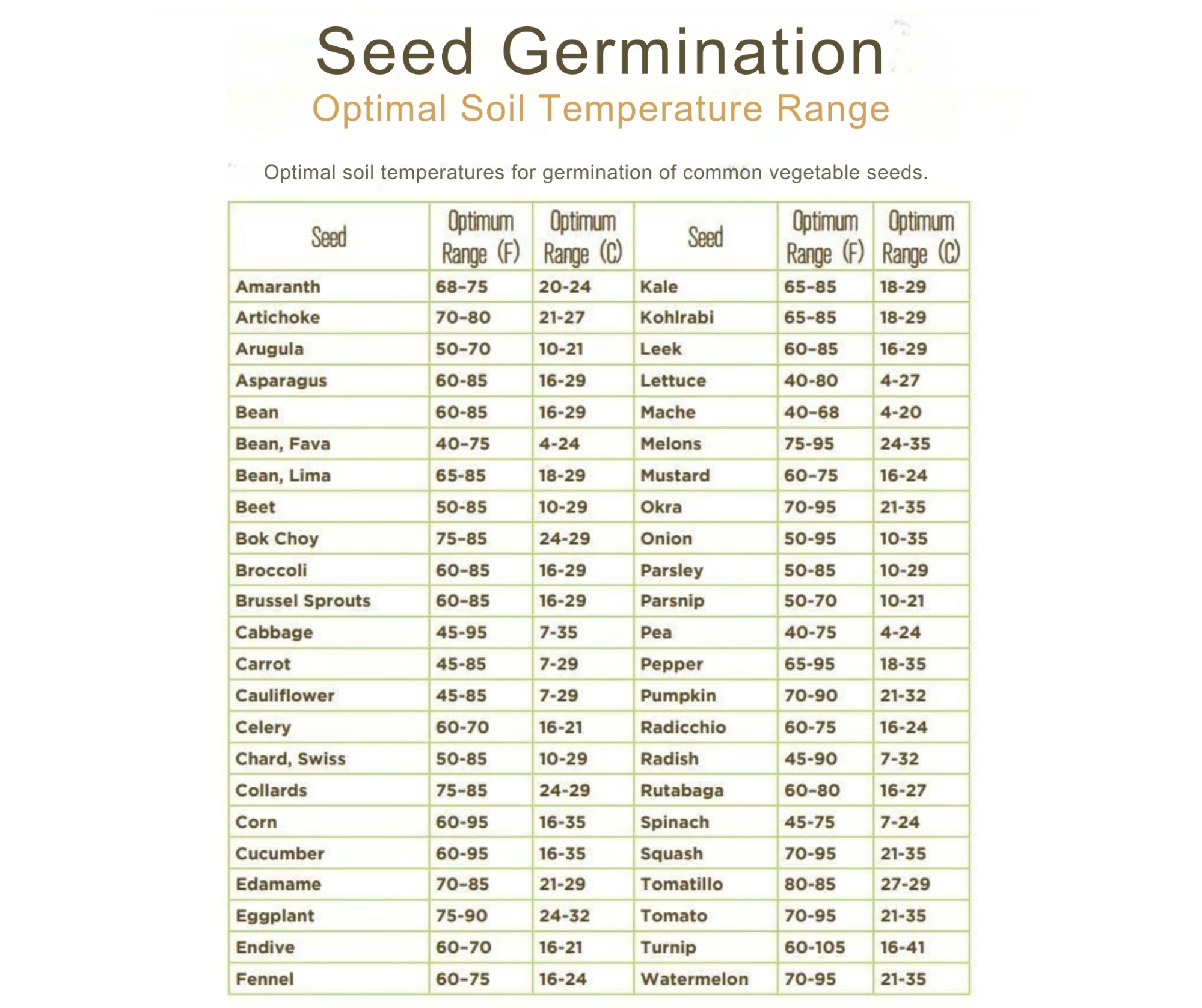
Soil temperature (germination threshold)
🔗Trust soil temperature thresholds rather than calendar dates (see OSU Extension , ACES, Univ. of Oregon for crop-by-crop ranges).
Day length (are you pushing growth or triggering bloom?)
Water tension (your irrigation capacity + ground cover)
As late summer softens into early fall, many gardens benefit from "restart sowings." If you're mapping this window, you'll appreciate our round-up on what to sow in September—quick greens, light cover crops, and late nectar for pollinators.
If cool nights arrive sooner where you live, what to sow in October helps you anchor garlic, broad beans and hardy perennials while keeping soil active.
5) Water & living soil: adjust effort by season
- Spring — short, frequent waterings at sowing; space them out once roots anchor.
- Summer — one deep watering and a light-colored mulch cut evaporation; in containers, prefer capillary/reservoir systems.
- Autumn — moisture structures soil; don't leave it bare—cover it with gentle mixes.
- Winter — skip watering when cold and saturated; build organic matter instead.
🔗 INRAE — Plant cover & ecosystem services: effects on infiltration, structural stability, auxiliaries/pollinators. and FAO — Soil health & ecosystem services: syntheses on covered soils, water infiltration, erosion, soil biodiversity. syntheses show that covered, biologically active soils infiltrate water better, reduce erosion, and stabilize yields—your best climate insurance. syntheses show that covered, biologically active soils infiltrate water better, reduce erosion, and stabilize yields—your best climate insurance.
6) Helpful biodiversity & companion blooms, on time
- Late winter / early spring: sweet alyssum, phacelia—early nectar for hoverflies and wild bees. 🔗UNH (hoverflies & alyssum)
🔗UNH (hoverflies & alyssum) - High summer: borage, cosmos—keeps pollinators working when beds tire.
- Autumn: calendula, asters—a final nectar bridge before winter.
👉To coordinate bloom timing with crop guilds that curb pests and steady yields, explore the Companion Planting Guide: Growing Harmony in Your Garden .

7) SeedsWild tools (AI alerts & garden log)
- Sow_Stage — pings when soil temp hits a crop's threshold.
- Growth_Stage — tracks first bloom/fruit set so you feed at the right time.
- Harvest_Period — calls the peak harvest window (flavor & nutrition).
- Seed Alerts — frost/wind/heat advisories with simple protection moves.
- Garden Log — capture dates, compare seasons, and anticipate the next, with calendar notifications for sowing and harvest dates.
8) Further reading you'll find handy
- What to sow in November — winter salads, broad beans, light cover crops, bulbs. (slug: /what-to-sow-in-november) - coming
- What to sow in December & start indoors — microgreens, herbs under lights, cold-frame lettuces. (slug: /what-to-sow-in-december-indoor-starts)
- Winter bed prep made simple — mulch choices, fabrics, frost-killed covers. (slug: /winter-bed-prep-mulch-cover-crops)- coming
- Bare-root fruit trees: winter planting window (Dec–Feb) — timing, heel-in, establishment watering. (slug: /bare-root-fruit-trees-winter-planting)
- February sowing calendar by climate zone — soil temps, mini-tunnels, thermal fleece. (slug: /february-sowing-calendar-by-zone) - coming
💚 Join the SeedsWild Community
Seasonal gardening isn't a race—it's a dance. Learn, adjust, share. Join the SeedsWild Community to swap field notes, access organic seeds, and let the SeedsWild AI turn perfect timing into simple actions.
📚 References
- INRAE — Cover crops and ecosystem services: water infiltration, erosion control, beneficials.
- FAO — Soil health & biodiversity; pollination and ecosystem services (overview syntheses).
- Agronomy literature on soil temperature thresholds, photoperiod effects, and water-use efficiency in vegetable systems.