
🌿 1. Why December Is Not a Dormant Month
People often imagine December as the end of the gardening year. In reality, it marks the beginning of the next cycle.
Experienced gardeners know that the soil should never stay bare, and that certain species love the cold.All Professionals confirm that winter is a strategic moment for hardy crops, soil preparation, early sowing and biodiversity care.
🥬 2. What You Can Sow in December
December is a month of precision: you choose robust, cold-adapted varieties, often sown under shelter for slow but steady growth.
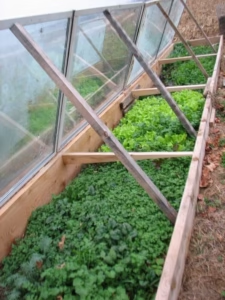
🌱 Sowing in a cold frame
Perfect for temperate regions.
- Winter spinach
- Mâche (corn salad) — the cold-hardy queen
- Garlic (spring varieties)
- White onions
- Broad beans (early varieties)
- Round peas (for mild climates)
- Parsley — slow germinator, cold helps stratification
SeedsWild AI tip (Sow_Stage module)
→ The app can predict germination timelines for your location & USDA/European hardiness zone.
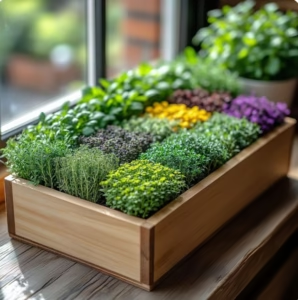
🌿 Cold-hardy aromatics
☀️ In mild climates (zones 8–9)
You can still sow outdoors:
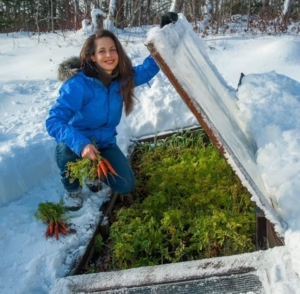
🥕 3. What to Plant in December (Outdoors)
December is a strong planting month for deep-rooting crops.
🌱 Plant now:
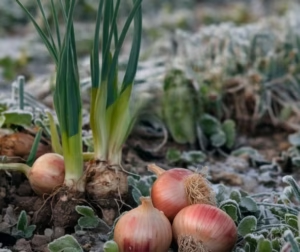
- Garlic (THE ideal month)
- Gray shallots
- Spring onions
- Winter-hardy brassicas: kale, winter broccoli
- Fruit trees (bare-root planting peak)
- Berry bushes (currants, raspberries, gooseberries)
🍓 Why plant in winter?
Because cold triggers deep root anchoring, which later supports drought resilience (INRAE — research on root establishment & climate adaptation).
🌱 4. Why Organic & Open-Pollinated Seeds Matter in Winter
Winter is the perfect moment to enrich your garden’s genetic biodiversity.Scientific consensus (INRAE, FAO) shows that open-pollinated lines:
- improve resilience to climate stress
- adapt progressively to local terroirs
- safeguard agricultural biodiversity
SeedsWild exclusively offers organic, open-pollinated, non-F1 seeds — essential for long-term biodiversity preservation.
🍂 5. Preparing the Soil for Winter
The soil is alive, even at 2°C.
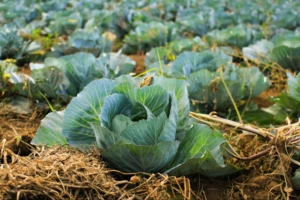
✔ Thick mulch (8–10 cm)
Protects from frost, nourishes microorganisms.
✔ Surface composting
Activates microbial life (INRAE — winter microbial dynamics).
✔ Winter cover crops
Phacelia, clover, mustards — natural protectors of winter soil.
⚠️ 6. Common Mistakes in Winter Gardening
- Leaving the soil bare ❌
- Watering during frost ❌
- Sowing non-resistant varieties ❌
- Poor ventilation in greenhouses ❌
- Over-compacted mulch ❌
🌿 7. SeedsWild Recommendations
⭐ Best winter-friendly varieties
Available on SeedsWild marketplace:
- Winter Spinach
- Mâche “Verte de Cambrai”
- Aguadulce Broad Beans
- Round Peas
- Thyme (organic)
- Chives (organic)
- Winter Lettuce “Reine des Glaces”
👉 https://www.seedswild.com/shop
⭐ SeedsWild AI (for winter gardening)
- Sow_Stage: optimized sowing windows
- Growth_Stage: real-time plant tracking
- Frost Alerts: climate-smart winter notifications
- Seed Recommendation: varieties matched to location & hardiness zone
👉 https://ai.seedswild.com/ai/
💛 🌱 Ready to grow a living garden even in winter?
Explore SeedsWild’s organic, open-pollinated seeds and climate-smart AI tools to cultivate smarter, protect biodiversity and prepare spring success — starting now.
👉 Marketplace: https://www.seedswild.com/
👉 AI Assistant: https://ai.seedswild.com/ai/