
1. Why Create an Indoor Jungle in Winter?
When the outside world turns grey, your home can stay alive.
Indoor plants don’t just decorate — they heal, filter, and regulate. According to NASA’s Clean Air Study, common houseplants can remove up to 87% of toxins in 24 hours, while WHO Europe notes that exposure to indoor greenery improves mental wellbeing and cognitive balance.
🌿 Your indoor jungle is a small ecosystem — a daily reminder that life continues to grow, even under clouded skies.
2. Choosing the Right Plants for Low Light
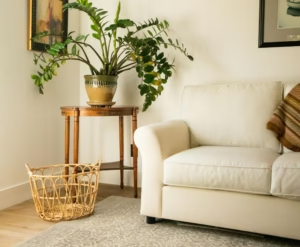
Not all plants crave sun. In winter, choose species that thrive in diffuse or indirect light.
Here are some easy, resilient champions for your cold months:
| Light level | Recommended species | Notes |
| 🕯 Low light | Snake plant (Sansevieria), ZZ plant (Zamioculcas zamiifolia), Pothos (Epipremnum aureum) | Minimal watering, purifies air |
| 🌤 Medium | Peace lily (Spathiphyllum), Calathea, Ferns | Boost humidity, brighten interiors |
| ☀️ Bright spots | Monstera deliciosa, Ficus elastica, Schefflera | Add structure and tropical touch |
💡 SeedsWild tip: Choose organic, pesticide-free soils with added coco coir — or visit our AI module to find the best potting mix for your plant species.
3. Design Tips: Turning Corners into Green Sanctuaries
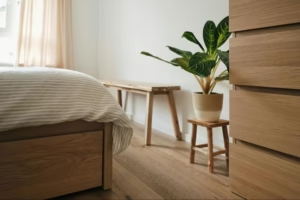
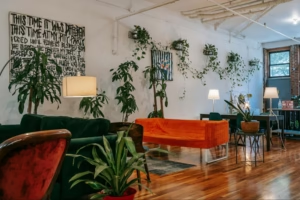
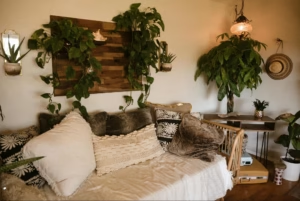
An indoor jungle is about composition. Mix heights, leaf shapes, and textures to create depth.
- Place tall plants (Monstera, Ficus) near light sources.
- Suspend trailing plants (Pothos, Philodendron) from shelves or ceiling hooks.
- Add moss poles, bamboo stakes or macramé hangers to save floor space.
📐 For more design inspiration, discover Urban Jungle: How to Turn Your Balcony into a Green Sanctuary — the same philosophy applies indoors.
4. Caring for Your Plants in Winter Light
Winter care is gentler, not harder. Your plants simply ask for less water, more observation, and balanced light.
- 🌡 Temperature: Keep between 18–22 °C, away from heating vents.
- 💧 Watering: Water only when the top 3 cm of soil are dry.
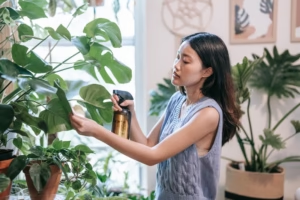
- 🌫 Humidity: Mist leaves or group plants for natural moisture.
- ☀️ Light: Clean dusty leaves to improve photosynthesis.
🔄 Rotate plants weekly to ensure even growth — especially near north-facing windows.
5. Air Purification, Mood & Microclimate
According to Harvard School of Public Health, plants reduce indoor CO₂ and volatile compounds, improving air quality and humidity.
Studies by the University of Exeter show a direct link between indoor greenery and reduced anxiety and fatigue.
🪴 Every plant becomes a small ally against winter gloom — photosynthesizing serenity into your home air.For more on urban ecology and the benefits of living with plants, explore Urban Garden: How City Spaces Become Living Ecosystems.
6. SeedsWild Tips for a Thriving Indoor Garden
✅ Combine aesthetic and function — use terracotta pots for air circulation.
✅ Add organic compost tea every 4–6 weeks to boost micro-life.
✅ Install LED grow lights (4000–6500 K) for darker rooms.
✅ Track plant hydration with the SeedsWild AI Care Module, connected to weather and humidity data.
✅ Repot in spring using bio-certified substrate for renewed vitality.
7. Conclusion: A Living Refuge in Every Room
In winter, your indoor jungle becomes a mirror of resilience.
While the world outside slows down, life quietly continues inside — in roots, leaves, and light.
By cultivating an indoor ecosystem, you also cultivate balance, mindfulness, and beauty.
🌿 Grow where you are — and let nature teach you how to thrive in stillness.
🌍 Join the SeedsWild Community — exchange care tips, share your jungle snapshots, and discover our AI companion for smart gardening all year round.
8. Scientific References
- FAO — Urban Agriculture and Green Infrastructure
On the benefits of green environments for city dwellers. - INRAE — Urban Greening and Cooling Cities
Studies on microclimate regulation by indoor and outdoor greenery. - NASA Clean Air Study — Plants that Purify Indoor Air
Demonstrates the detoxifying power of common houseplants. - Harvard School of Public Health — Microgreens & Indoor Nutrition
On nutritional value of edible indoor greens. - WHO Europe — Nature-Based Solutions and Mental Health
Highlights the mental and physical benefits of daily contact with nature.
University of Exeter — Green Spaces and Mental Health
Meta-analysis of wellbeing improvements through indoor and urban greenery.