
Every gardener eventually notices that two beds planted with the same seeds can produce very different vegetables. The difference often starts below ground, in a world of bacteria, fungi, earthworms and roots working together; in French, this close link between plant feeding and soil biology is sometimes described as nutrition et sol vivant.
Understanding the link between living soil and plant nutrition helps explain why organic gardening is more than a philosophy. It rests on how soil ecosystems recycle nutrients and make them available to your crops. In this guide, we look at what science from the FAO and the USDA says, and how you can apply it in your own vegetable garden in 2026.
Temps de lecture : 9 min
Living soil and plant nutrition (nutrition et sol vivant) in your vegetable garden
- What is living soil?
- How living soil and plant nutrition are connected
- Soil health and vegetable nutrient content
- Soil health principles for vegetable gardens
- How to build living soil in a vegetable garden
- Do cover crops improve nutrient cycling?
- Does healthy soil mean you never need to add nutrients?
- How can you tell if your soil has enough nutrients for your vegetables?
- Building your foundation with living soil
- FAQ
What is living soil?
Living soil is soil whose physical, chemical and biological components interact to support plant growth and ecosystem functions. It is not a formal soil classification. It is a way of describing soil by what it does: decomposing organic matter, cycling nutrients, holding water and hosting constant exchanges between roots and microorganisms.
The Food and Agriculture Organization of the United Nations (FAO) describes soil biodiversity as the variety of life below ground, from genes and species to the communities they form. This community is often called the soil food web. It includes soil microorganisms such as bacteria and fungi, along with nematodes, mites, insects, earthworms and other soil fauna. Each group plays a role, and together they turn a mineral substrate into a functioning ecosystem.
According to FAO soil biodiversity resources, these organisms contribute to the breakdown of organic matter, nutrient cycling, water entry and storage, resistance to erosion and plant nutrition. In other words, soil biodiversity and plant growth are closely connected. When you feed the soil life, you are indirectly creating better conditions for your vegetables.
How living soil and plant nutrition are connected
A common misconception is that soil organisms “feed” plants directly. The reality is more interesting. Soil life drives a series of transformations that convert nutrients locked in organic matter and soil minerals into forms that roots can absorb. This is the heart of soil biology and nutrient cycling.
Decomposition and mineralization
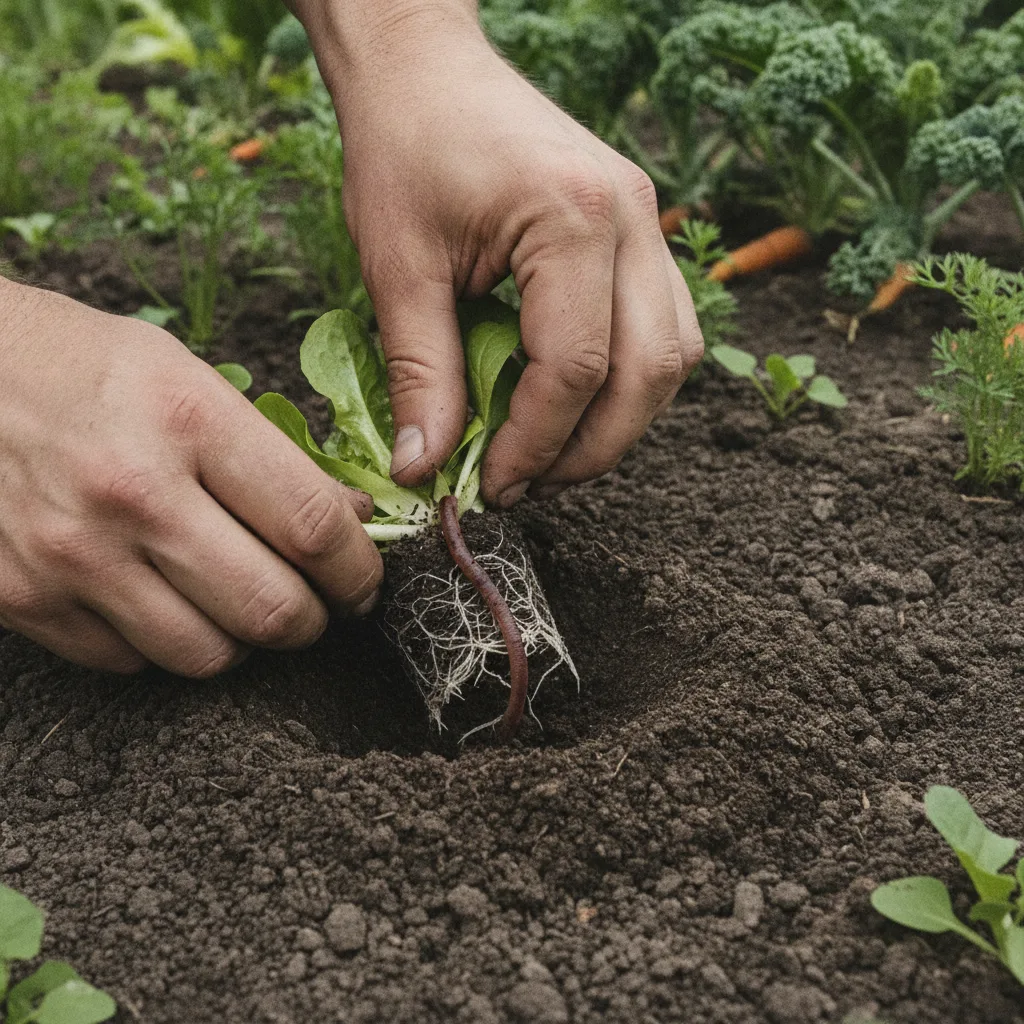
Plant residues, fallen leaves, roots and compost contain nutrients in organic forms. Plants cannot use most of these directly. Decomposition by soil organisms breaks this material down, and part of the nutrients it contains is released through mineralization into inorganic, plant available forms.
The FAO gives nitrogen as a clear example. As soil organisms decompose residues, organic nitrogen is converted into inorganic nitrogen that plants can take up. This is one step of the wider nitrogen cycle, which continuously moves nitrogen between the air, living organisms, organic matter and the soil solution.
The soil food web as a nutrient engine
Nutrient release does not stop at decomposition. Soil organisms eat one another, and these interactions matter for your vegetables. The FAO notes that when microorganisms are consumed by other organisms, such as certain nematodes or protozoa, nutrients like nitrogen can be released into the soil. This is why the soil food web and nutrient availability are so closely tied. A diverse, active web keeps nutrients moving rather than locked away.
It is important to stay realistic. Nutrient cycling is a dynamic process, not a precise delivery system. Biological activity does not guarantee that nutrients will be released at the exact moment or in the exact amount a crop needs. Temperature, moisture, soil type and management all influence the pace of these transformations.
The rhizosphere: where roots and microbes meet
The rhizosphere is the narrow zone of soil directly surrounding plant roots. It is one of the most biologically active places on Earth. Living roots release root exudates, a mix of sugars, acids and other compounds, into this zone. The USDA Natural Resources Conservation Service (NRCS) describes these exudates as a food source for soil organisms and links root associated biological activity to nutrient cycling.
This creates a partnership. The plant invests part of the energy it captures through photosynthesis to feed microbes near its roots. In turn, the concentrated microbial activity in the rhizosphere supports nutrient transformations close to where roots can absorb them. Understanding the rhizosphere and nutrient uptake explains why soil that always has living roots tends to be biologically richer than soil left bare.
Mycorrhizal fungi and plant nutrition
Among the most remarkable members of the soil food web are mycorrhizal fungi. These fungi form associations with the roots of many plants. Their thin filaments, called hyphae, extend well beyond the reach of the roots themselves, exploring a much larger volume of soil.
The FAO explains that these hyphae can help plants obtain nutrients they could not easily reach alone. In return, the plant supplies the fungi with carbon. This exchange is a striking example of how mycorrhizal fungi and plant nutrition are linked, and why disturbing the soil too often can break these delicate networks.
Important
Not every plant forms mycorrhizal associations, and their benefit varies with soil conditions and nutrient levels. Some vegetables, such as those in the cabbage family, are generally considered poor hosts, so mycorrhizae are one piece of the picture rather than a universal solution.
Soil health and vegetable nutrient content
Living soil as a foundation for nutrient-dense vegetables
This is where the strategic question for organic gardeners comes in. If living soil supports nutrient cycling and plant access to nutrients, does it lead to more nutritious vegetables? The logic is sound: a vegetable can only build its tissues from what it can access, and a biologically active soil with good structure gives roots a wider, steadier supply of water and nutrients over the season.
It is worth being precise, though. The nutrient density of vegetables depends on many factors, including the variety you grow, ripeness at harvest, climate, and the nutrients actually present in the soil. Living soil is best understood as a foundation that creates the conditions for well nourished plants, rather than a single switch that guarantees a given nutrient level.
This is also why the choice of seed matters. Organic, open pollinated varieties selected for flavour and adaptability give you the genetic potential, while healthy soil helps that potential express itself.
Beyond nutrition, the FAO highlights other benefits of active soil life that indirectly support vegetable quality. Soil organisms help build soil structure, which improves water infiltration and storage and increases resistance to erosion. Plants that do not swing between drought and waterlogging are better able to take up nutrients consistently.
Soil health principles for vegetable gardens
The USDA NRCS summarises its approach in four soil health principles. They were designed for farms of all sizes, and they translate well to the home vegetable garden. NRCS links them to supporting soil biology, organic matter, nutrient cycling and plant growth, while noting that they should be adapted to each site.
The four NRCS soil health principles for gardens
The four NRCS principles are:
- Minimize disturbance: reduce digging and tilling where possible to protect soil structure, fungal networks and habitat for soil fauna.
- Maximize soil cover: keep the surface protected with mulch, crop residue or cover crops so soil is rarely left bare.
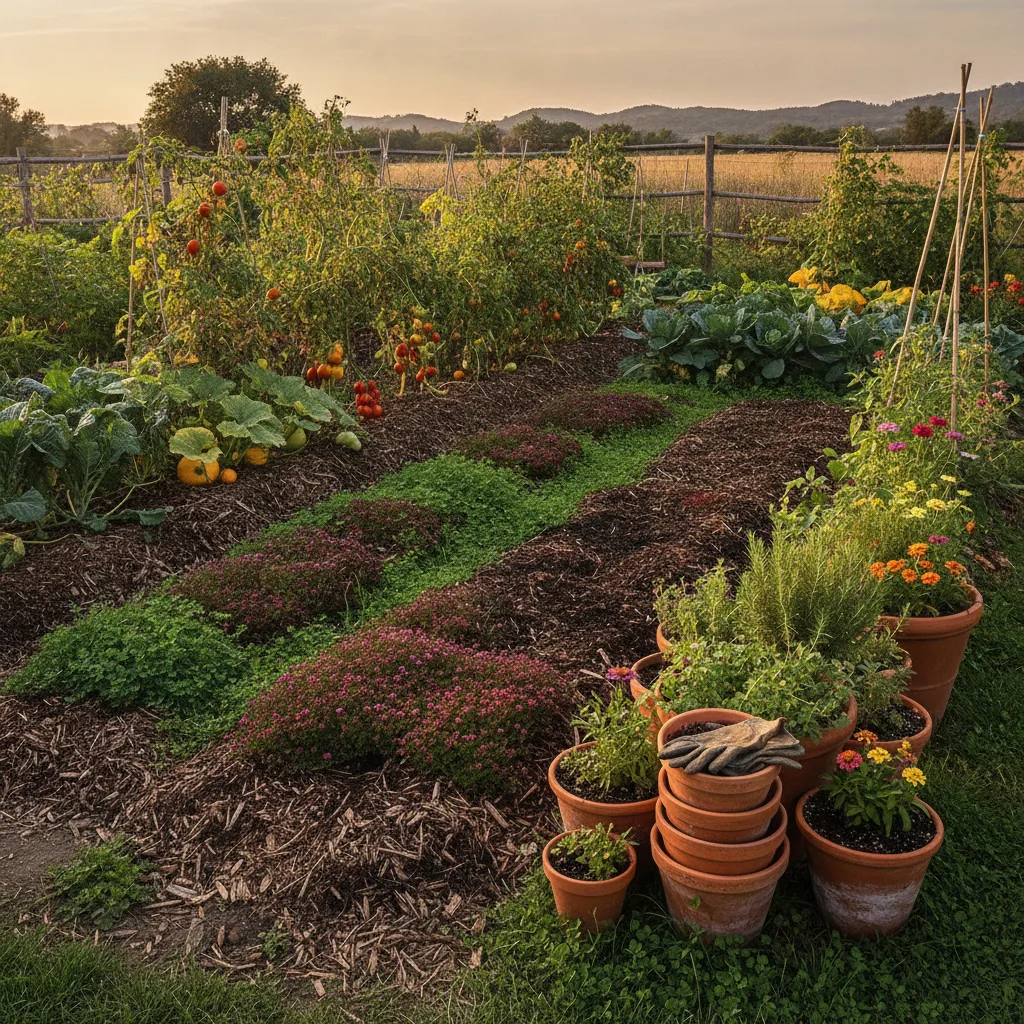
- Maximize biodiversity: grow a diversity of vegetables, flowers and herbs, and use crop rotation to vary what the soil life receives.
- Maximize continuous living roots: keep something growing for as much of the year as possible, so the rhizosphere is always fed through root exudates.
Minimal soil disturbance, often called no till, keeps the underground architecture intact.
| Principle | Practical example |
|---|---|
| Minimize disturbance | Loosen soil gently with a broadfork instead of turning it over with a spade. |
| Maximize soil cover | Keep beds mulched with compost, shredded leaves or crop residue. |
| Maximize biodiversity | Rotate vegetable families and mix vegetables with flowers and herbs. |
| Maximize continuous living roots | Sow cover crops or living mulches between main vegetable crops. |
The USDA small scale guide to soil health gives very concrete examples of these principles in action: leaving crop residue, sowing cover crops, diversifying rotations and maintaining living roots. It defines soil health as the continued capacity of soil to function as a living ecosystem that sustains plants, animals and people.
How to build living soil in a vegetable garden
Practical steps to build living soil
Turning these principles into garden practice is simpler than it sounds. Start by feeding the soil with organic matter. Homemade compost, shredded leaves and plant residues give decomposers the raw material they need. Mulching is one of the easiest steps, as it protects the surface, moderates temperature, retains moisture and slowly feeds soil organisms as it breaks down.
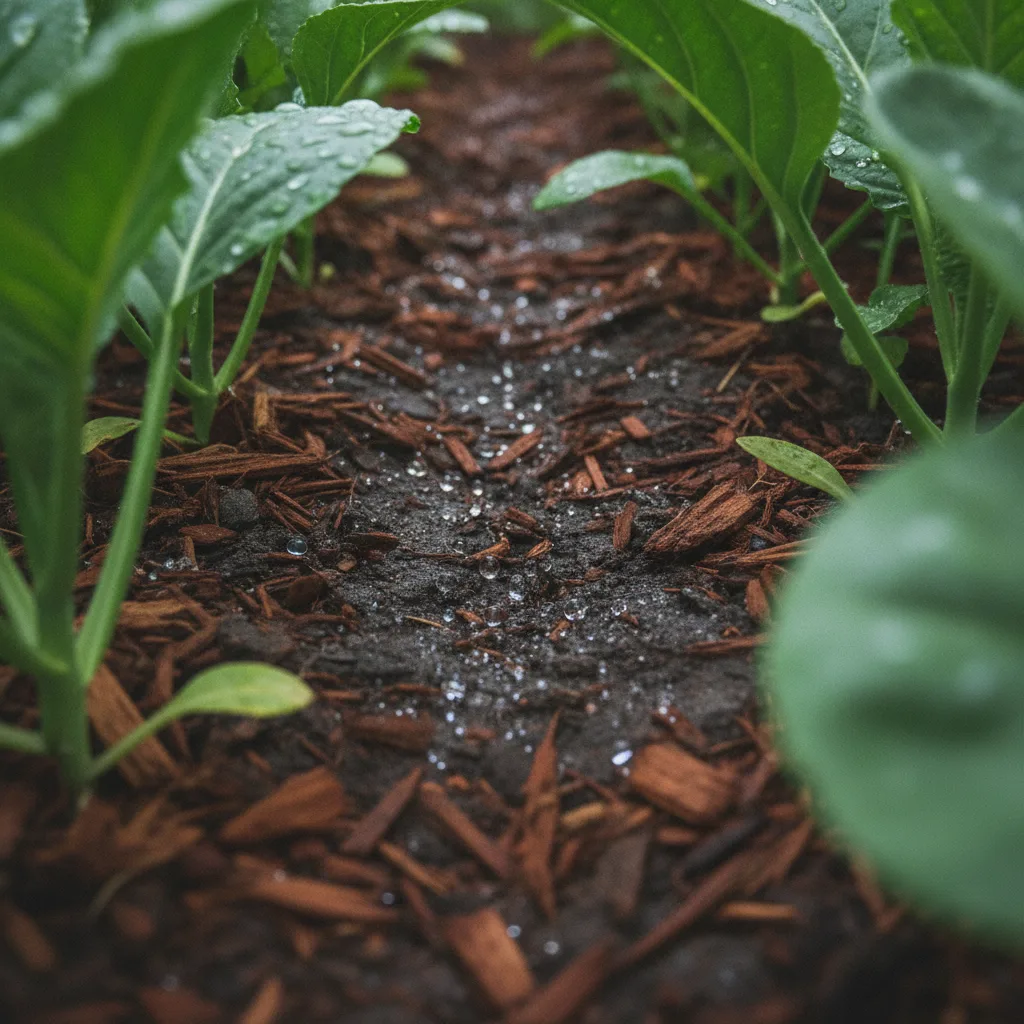
Next, reduce soil disturbance. Instead of turning beds over every year, loosen compacted areas gently with a broadfork and let earthworms and roots do the rest of the work. Over time, this preserves the channels and aggregates that improve water infiltration.
Finally, avoid leaving beds bare between crops. A living mulch or a cover crop keeps roots in the ground through autumn and winter, which brings us to one of the most effective tools for nutrient cycling.
Do cover crops improve nutrient cycling?
Cover crops, also called green manures, are plants grown mainly to protect and improve the soil rather than to harvest. Cover cropping fits several NRCS principles at once: it covers the soil, adds plant diversity and maintains continuous living roots. The USDA lists cover crops among its main practical examples for supporting biological activity and nutrient cycling.
When a cover crop is cut and left on the surface or lightly incorporated, it becomes food for soil organisms. Decomposition then gradually returns the nutrients it contains to the soil cycle. Legumes such as clover, vetch or sainfoin are especially popular in vegetable gardens, as they host bacteria in their root nodules that are part of the nitrogen cycle.
On the Seeds Wild marketplace, you can find sainfoin seeds sold specifically as a green manure, a practical way to start experimenting with cover crops nutrient cycling in your own beds.
Good to know
Rotating vegetable families from year to year complements cover crops by varying root depths, residues and the organisms they support, while also reducing the build up of crop specific problems. A simple vegetable garden crop rotation plan makes this easier to follow.
Does healthy soil mean you never need to add nutrients?
This is one of the most frequent questions, and the honest answer is nuanced. Biological processes contribute significantly to nutrient cycling, and a well managed living soil can reduce how much you need to bring in from outside. However, the FAO and USDA sources do not support the idea that soil life alone will always supply everything a crop needs.
Harvesting vegetables removes nutrients from the garden every season. If a soil was naturally poor in a given mineral, microbes cannot create it from nothing. In practice, organic gardeners keep returning nutrients through compost, green manures, mulches and other natural amendments, while relying on soil biology to make those nutrients available gradually.
How can you tell if your soil has enough nutrients for your vegetables?
Observation is a valuable starting point. Good crumb structure, a pleasant earthy smell, plenty of earthworms and water that soaks in rather than pooling are all signs of active soil life. Keeping notes on what you grew, what you added and how plants performed also builds useful knowledge over time.
Visual symptoms on leaves, however, are not a reliable diagnosis on their own, as several different causes can produce similar signs. Soil testing remains the most dependable way to check pH, organic matter and nutrient levels. Combining a periodic soil test with your own observations gives you a clear picture and helps you adjust your practices with confidence.
Smart tools can support this process too. The SeedsWild AI app is designed to offer personalized recommendations based on your garden and local conditions, helping you plan sowings and care in step with your soil.
Building your foundation with living soil
Living soil is not a marketing slogan but a description of how soil actually works. Bacteria, fungi, earthworms and roots form a food web that decomposes organic matter, cycles nutrients and supports plant access to them, from the rhizosphere to the far reaching hyphae of mycorrhizal fungi.
By following the four soil health principles, covering your soil, keeping roots in the ground, diversifying your crops and disturbing the soil as little as possible, you create the foundation for vigorous, well nourished vegetables. Pair that foundation with quality organic seeds and regular soil testing, and you have one of the strongest scientific arguments for organic gardening.
FAQ
How long does it take to build living soil in a vegetable garden?
There is no fixed timeline, as it depends on your starting soil, climate and practices. Many gardeners notice improvements in structure and earthworm activity within a few seasons of consistent mulching, composting and cover cropping, but building organic matter is a gradual, long term process.
Can I have living soil in containers or on a balcony?
Yes, to a degree. Potting mixes enriched with mature compost, regular mulching and avoiding long periods of bare, dry substrate all help maintain biological activity. Containers are more limited than open ground, so refreshing the mix with organic matter each season is helpful.
Should I buy microbial inoculants to create living soil?
The sources discussed here explain soil ecology and management, not the performance of commercial products. Most gardeners will get lasting results by feeding existing soil life with organic matter, living roots and minimal disturbance rather than relying on a product.
Does digging destroy soil life?
Intensive digging can disrupt soil structure, fungal networks and the habitat of soil fauna, which is why minimal disturbance is one of the NRCS principles. Occasional gentle loosening of compacted areas is generally less disruptive than turning the whole bed every year.
When is the best time to sow a cover crop?
Cover crops are most often sown after a summer harvest, in late summer or early autumn, so that roots occupy the soil through winter. Some fast growing species can also fill short gaps between vegetable crops during the growing season.