

Compost tea, often called thé de compost, has a loyal following among organic gardeners who want to bring some of the life of a good compost pile straight to their plants. It is a liquid made by steeping or brewing mature compost in water, then applying it to the soil or the leaves.
The method is simple, but the results depend heavily on your compost, your water and your hygiene. In this guide, we explain how to brew it, how to apply it, what research actually says, and how to use it safely around edible crops.
Thé de compost (Compost Tea) – How to Brew, Apply and Use It Safely
Temps de lecture : 9 min
- What is compost tea and what is it used for?
- Aerated compost tea vs non-aerated compost tea
- How to make compost tea at home in a bucket
- How long to steep compost tea
- How to apply compost tea for plants
- How long does homemade compost tea last?
- Is compost tea safe to use on vegetables?
- Does compost tea work against plant disease?
- Getting the most from compost tea
- FAQ
What is compost tea and what is it used for?
Definition and main uses
Compost tea is a water-based preparation that transfers some of the microorganisms and soluble nutrients present in compost into a liquid. Gardeners use it as a soil amendment around the root zone or as a foliar application on leaves. Its composition is never fixed. Scientific reviews point out that it depends on the source material, the brewing process, the water used and the temperature during steeping.
Compost tea should not be confused with compost extract. USDA guidance for organic production describes compost extract as a mixture of compost and water that is used within an hour of preparation, whereas compost tea is held or brewed for a longer period. This distinction is more than vocabulary. The longer the mixture sits, the more microbial populations change, which can affect both the potential benefits and the risks.
For gardeners who already make their own compost, the tea is a way to extend the value of that material. It does not replace a well-built soil, regular additions of organic matter or good crop rotation. Think of it as a complement that may support the soil life you are already feeding.
Aerated compost tea vs non-aerated compost tea
Main brewing methods
Two main methods are described in the literature. Aerated compost tea (ACT) is brewed with an air pump that bubbles air through the water during the whole process. Non-aerated compost tea (NCT) is simply left to steep without continuous aeration, sometimes with occasional stirring. A USDA Agricultural Research Service summary describes incubation periods for non-aerated tea ranging from 1 to 14 days, and methods vary widely between studies.
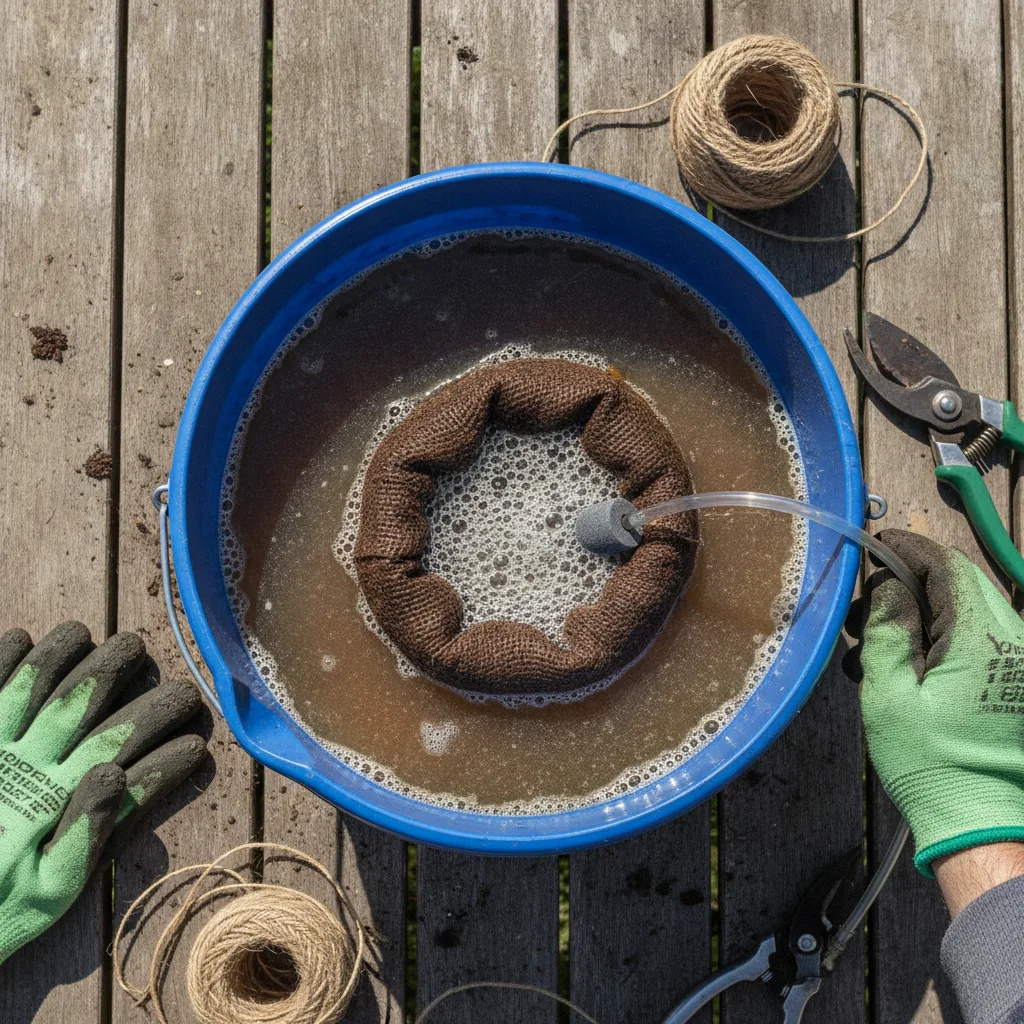
Many online sources claim that aeration is essential. Research does not support such a firm statement. In disease-control comparisons summarized by the USDA ARS, the compost source turned out to be more important than whether the tea was aerated or not. In other words, a good compost brewed simply can outperform a poor compost brewed with sophisticated equipment.
The table below summarizes the main differences between the three preparations you are likely to come across.
| Preparation | Process | Typical duration | Equipment | Key point |
|---|---|---|---|---|
| Compost extract | Compost mixed with water and used promptly | Used within an hour (USDA NOP guidance) | Bucket, mesh bag or strainer | Short contact time, no prolonged brewing |
| Aerated compost tea | Air pumped through the mixture during brewing | Varies by method | Air pump, tubing, mesh bag | Aeration does not guarantee better disease suppression |
| Non-aerated compost tea | Compost left to steep without continuous aeration | 1 to 14 days in studies summarized by USDA ARS | Bucket, mesh bag | Simple to make, results depend on the compost source |
How to make compost tea at home in a bucket
Simple bucket method
The University of Illinois Extension offers a straightforward steeping method that suits most home gardens. It is one practical recipe, not a standardized or pathogen-tested formula, so treat it as a starting point. Here are the steps of this compost tea recipe.
- Fill a clean 5-gallon bucket with water. Rainwater is suggested where it is available.
- Place 4 to 6 cups of mature compost in a mesh bag or another porous material.
- Suspend the bag in the water and let it steep for 24 hours.
- Remove the bag and apply the tea soon after steeping. The Illinois handout recommends using it within four hours.
The quality of your compost is the decisive factor. Use only fully mature compost that smells earthy, has a crumbly texture and no longer heats up. If you are still building your system, our guide to making your own compost in six steps covers the basics of a well-managed pile. Avoid any compost that contains raw manure that has not been properly composted, since it increases the risk of introducing human pathogens.
Water matters too. Municipal water often contains chlorine or chloramines, which are designed to limit microbial life. Some guidance suggests leaving chlorinated water in sunlight for a while, but this is not a reliable way to remove every type of disinfectant, especially chloramines. Rainwater collected in a clean container is a sensible choice, otherwise check with your local water provider on how your tap water is treated.
Important
Clean your bucket, mesh bag and any air pump tubing thoroughly before and after each batch. Residues left from a previous brew can harbor unwanted microorganisms and affect the next one.
How long to steep compost tea
There is no single correct steeping time. The Illinois method uses 24 hours, which is a reasonable default for a simple compost tea in a bucket. Research protocols for non-aerated tea range from 1 to 14 days, but longer brews are harder to control at home and do not automatically produce better results. For most gardeners, a short and clean brew followed by immediate use is the most practical approach.
What about nutrient additives such as molasses? Many recipes include them to boost microbial growth. The San Francisco Department of the Environment review notes that these supplements can also support the growth of human pathogens such as Escherichia coli (E. coli) and Salmonella if they are present in the starting compost. We therefore recommend skipping additives, especially if you plan to use the tea anywhere near edible crops.
How to apply compost tea for plants
Soil drench and foliar spray
You can apply compost tea in two ways. The first is a soil drench, where you pour the tea around the base of plants so that it reaches the area where roots are actively growing. This is the simplest and most common use, and it keeps the liquid away from edible leaves and fruits.
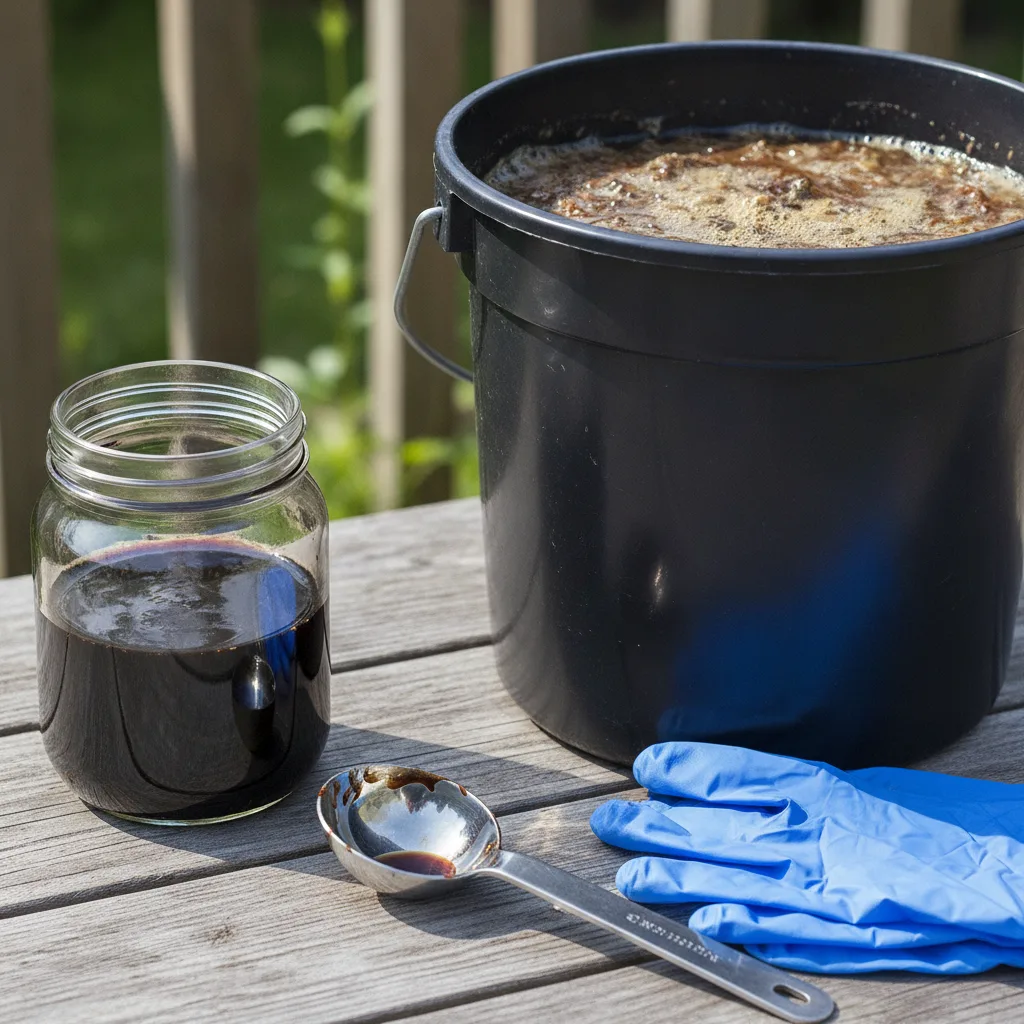
The second is a compost tea foliar spray. If you spray leaves, aim for even coverage of both upper and lower surfaces, as the Illinois Extension handout recommends. Spray in the cooler part of the day, in the morning or late afternoon, so the liquid does not evaporate immediately.
Does compost tea need to be diluted? Some guidance suggests dilution before foliar use, but recommended rates vary from one source to another, and no single ratio is universally accepted. If you dilute, use the same clean, chlorine-free water. Filtering is more clearly important. Fine particles of compost can clog sprayer nozzles and drip irrigation lines, so strain the tea through a fine mesh or cloth before pouring it into any equipment.
Good to know
Timing the application is part of the method. Applying the tea right after watering, when the soil is already moist, helps the liquid spread through the root zone instead of running off dry ground.
How long does homemade compost tea last?
Homemade compost tea is not a product you store. Once brewing stops, the microbial balance keeps changing, and a sealed container can quickly turn anaerobic and develop an unpleasant smell. The Illinois Extension recommends application within four hours after steeping. This is a practical guideline from that source rather than a validated shelf life, but it is a good rule to follow. Plan your brew so that you can use the whole batch the same day.
Is compost tea safe to use on vegetables?
This is the most important question for anyone growing food. Compost tea safety depends on the starting material and on how it was prepared. If the compost contains human pathogens, brewing can carry them into the liquid, and the use of nutrient additives may favor their multiplication. Reviews compiled by the San Francisco Department of the Environment document these concerns with E. coli and Salmonella.
UConn Extension advises caution with compost tea for vegetables unless the preparation method is known to minimize human pathogens, and suggests reserving uncertain preparations for non-edible plants such as ornamentals and flowers. The USDA National Organic Program guidance also describes restrictions and preharvest intervals in certain situations, notably for teas made with additives. These are regulatory recommendations for certified organic production and do not replace current local rules or food-safety advice.
In practice, a few habits greatly reduce the risk on edible crops.
- Use only mature, well-managed compost from a source you trust.
- Keep all brewing equipment clean and avoid molasses or other additives.
- Apply the tea as a soil drench rather than spraying it on edible leaves or fruit.
- Leave a good margin of time before harvest and always wash produce before eating it.
Does compost tea work against plant disease?
Compost tea has been studied as a source of nutrients and beneficial microorganisms, and as a possible tool for plant disease suppression. Some results are encouraging. A peer-reviewed study found suppression of damping-off caused by Rhizoctonia solani under specific experimental conditions. However, this demonstrates an effect for a particular crop and pathogen setup, not a general protective effect.
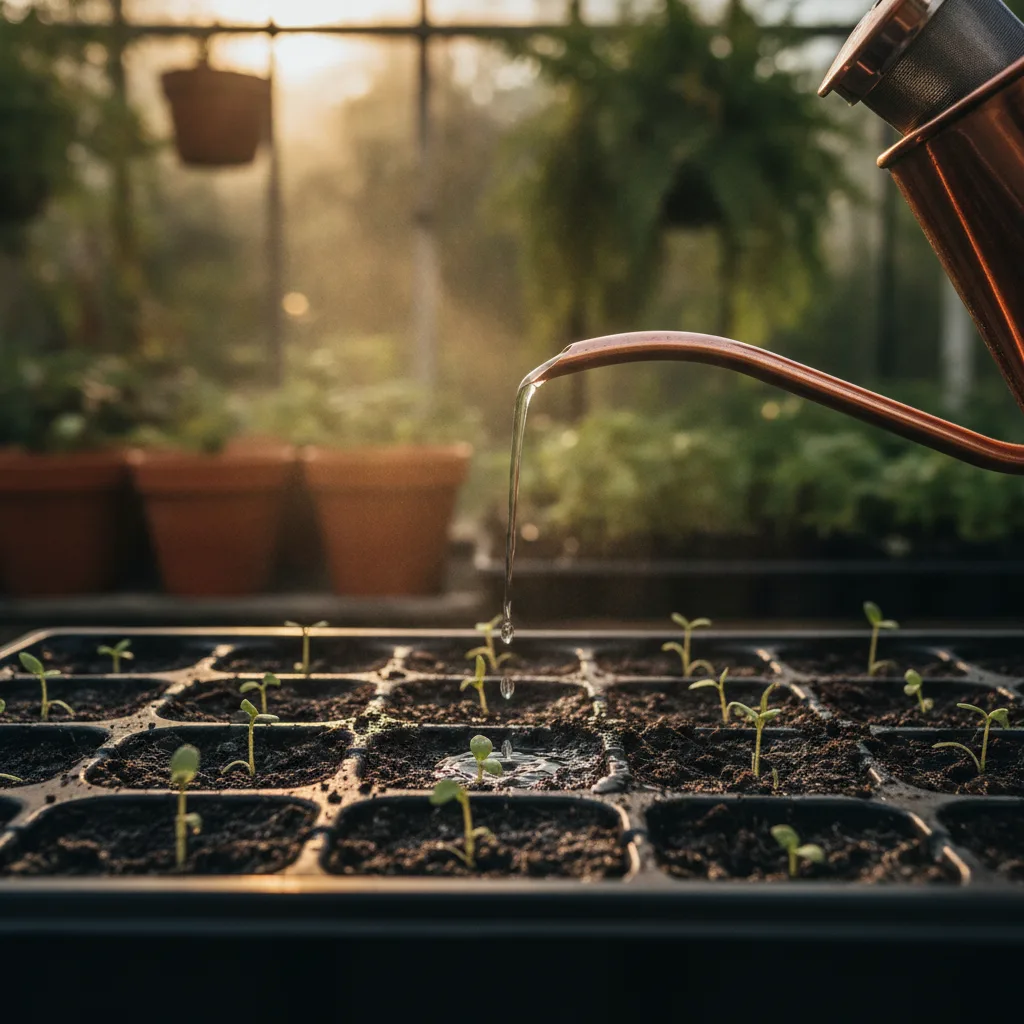
The broader picture is one of variability of results. A Washington State University Extension review reports that laboratory findings do not always translate into reliable field performance and cautions against assuming that compost tea will control disease. Scientific reviews reach a similar conclusion, noting that efficacy depends on the compost, the preparation, the crop and the growing conditions.
So, does compost tea work? It may help, especially as a way to bring microbial life to soils that need it, but it is not a guaranteed cure. If your plants struggle, check the fundamentals first: light, watering, soil structure, spacing and variety choice. Choosing robust, open-pollinated seeds adapted to your region and building soil fertility with practices such as green manures, for example sainfoin, often have a deeper and more lasting effect than any liquid amendment.
Key takeaway
The compost you start with matters more than the brewing gadget you use. A clean, simple, mature-compost brew used promptly is a sound approach for most home gardens.
Getting the most from compost tea
Compost tea is an accessible technique for gardeners who already master composting and want to go a step further. Brewed with mature compost, clean water and clean equipment, then applied promptly as a soil drench or a filtered foliar spray, it can be a useful complement to a living soil. It is not a miracle solution, and research shows that results vary a lot from one situation to another. Keep realistic expectations, skip unnecessary additives and stay cautious around edible crops. If you want tailored guidance for your plot, the SeedsWild AI app can help you match crops and care routines to your local conditions, and our community is a good place to share your own brewing experiences.
FAQ
Can I use compost tea on seedlings?
Seedlings are delicate, so if you try it, use a well-filtered tea applied to the growing medium rather than sprayed on young leaves. Research on damping-off is promising in specific conditions, but it is not a substitute for good hygiene, clean trays and appropriate watering.
What type of compost works best for brewing?
Mature, well-decomposed compost with an earthy smell is the best base. Since studies show that the compost source has a stronger influence than the brewing method, it is worth using your most finished, carefully managed batch.
Is it normal for compost tea to smell bad?
A sour or rotten smell usually signals that the brew has turned anaerobic. Smell is not a reliable indicator of safety either way, so when a batch seems questionable, do not use it on edible crops and start again with a fresh, clean brew.
Can I brew compost tea in winter?
You can, but cold water slows microbial activity and makes results even less predictable. Most gardeners brew during the growing season, when plants are actively taking up water and nutrients through the root zone.
Is vermicompost suitable for making tea?
Worm castings can be used in the same way as regular mature compost, with the same rules on cleanliness, prompt use and caution on edible plants. Their quality, like any compost, depends on what the worms were fed and how the bin was managed.